CULTURE

Women in STEM

Women in STEM: Driving Innovation!

Women in STEM: Driving Innovation! 1080 1080 Spii

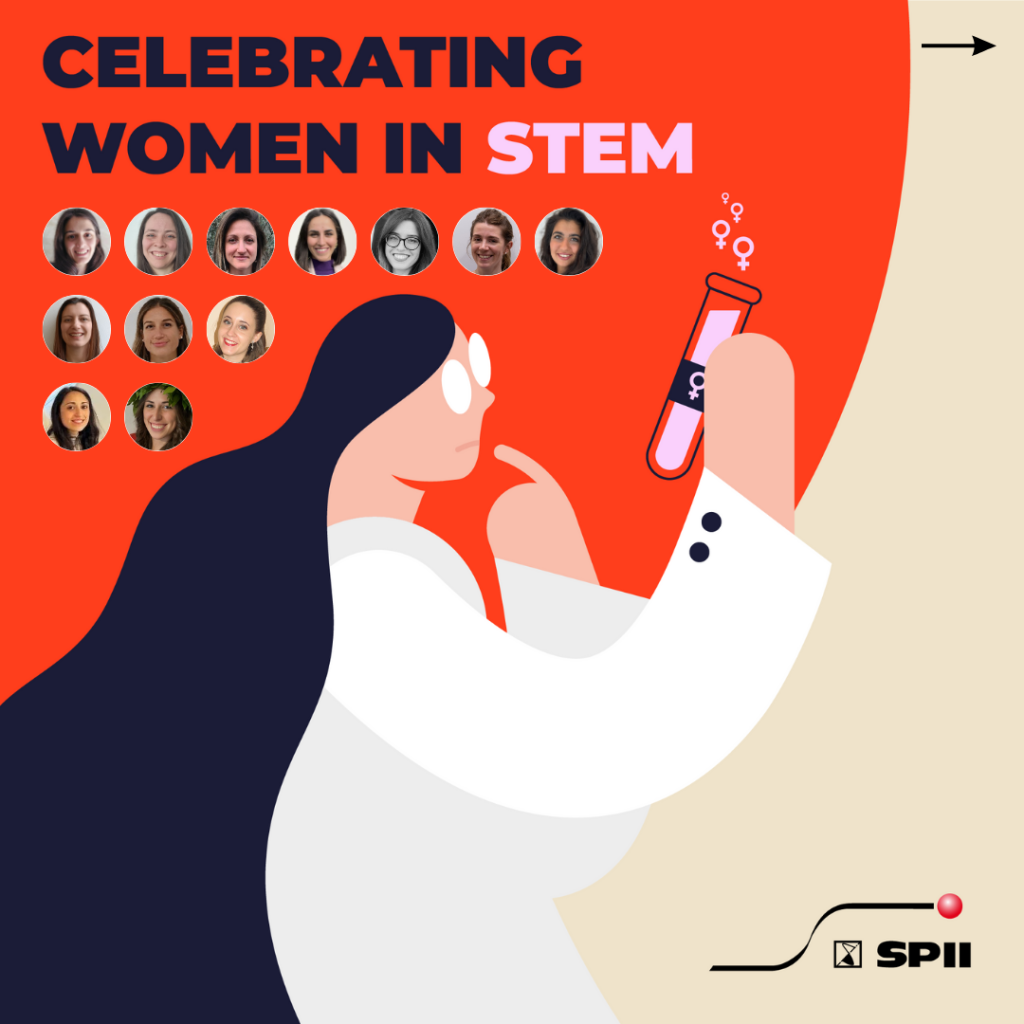
On the International Day of Women and Girls in Science, we want to celebrate all women in STEM!
In a field that still strives for greater gender equity, it is essential to recognize their contributions and inspire more girls to pursue careers in science and technology.

At SPII, we are proud of our STEM professionals, who are driving innovation in human-machine interfaces in the railway sector. Thanks to their expertise and vision, they tackle complex challenges and develop tailor made solutions every day.

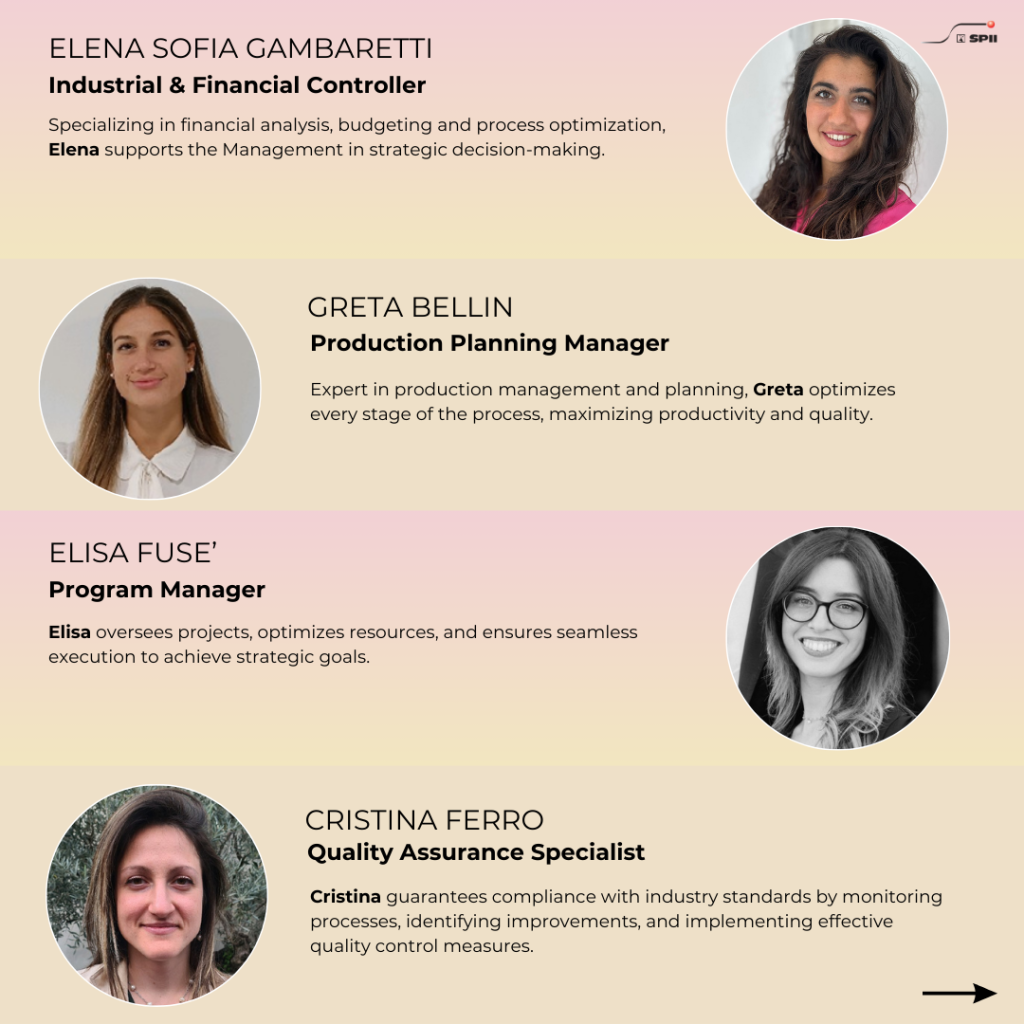
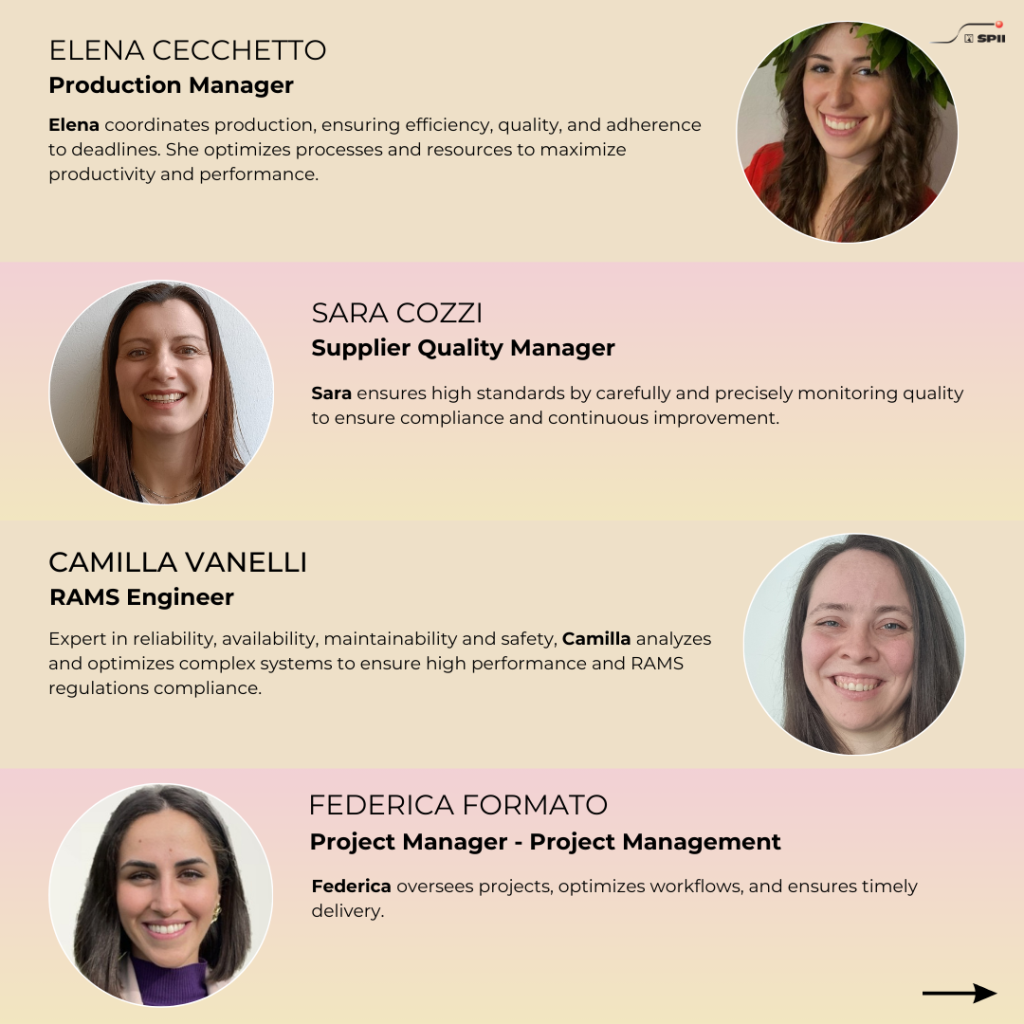
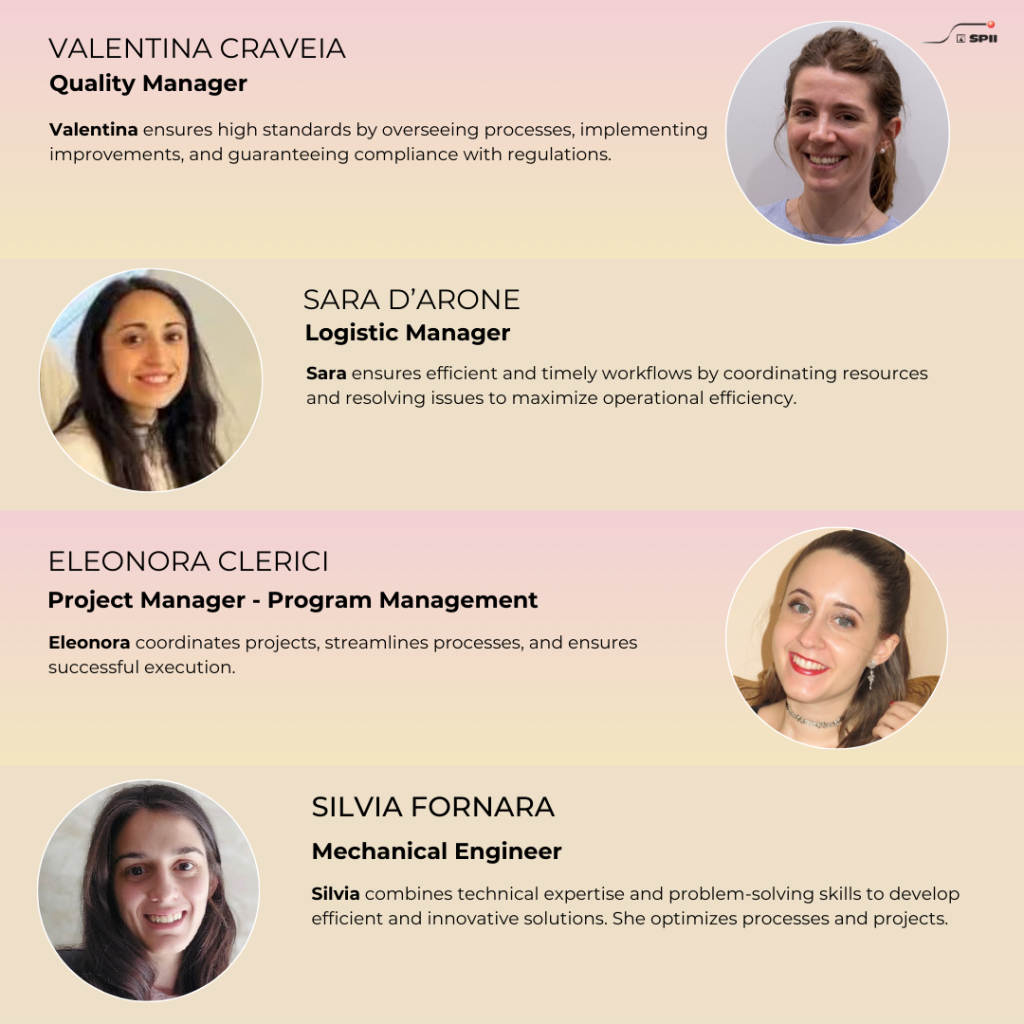
Meet the incredible women in STEM at our company!


To all the girls and women aspiring to a STEM career: the future needs your creativity, your ideas, and your innovative spirit!

Eleonora Clerici, Silvia Fornara, Camilla Vanelli, Cristina Ferro, Elisa Fusรจ, Federica Formato, Valentina Craveia, Elena Cecchetto, Sara Cozzi, Elena Sofia Gambaretti, Greta Bellin, Sara D’Arone.

#WhereverWeCan#WomenInSTEM #STEMInnovation #BreakingBarriers #WomenInScience

See you next time,
Claire Zuber

10.-ETHICS

There is no other value without Ethics

There is no other value without Ethics 2200 1393 Spii

10. SPII’s Charter of Values – #Ethics

There can’t be sustainability without ethics.

The last and the first thing you do are often the most crucial. This is why we have left #Ethics as the final Value in our Charter of Values.

It was a document we wrote because we wanted to make more concrete and official the efforts of our company towards topics of work, life, and the future we believe are important.
We were committed to making a difference in the world by prioritizing them, and the Values Charter is a testament to this commitment.

These Values have always been with us, but writing them down gave them consistency. It was like writing them in stone.
We would be more bound than ever to them.

Since we started the process of analysis, questioning, discussing, and selecting the Values that we wanted to represent SPII, and that SPII had to represent with its doing, so many things have changed.

It’s been about one year since then, and during this time we have celebrated our 75th birthday, we have finalized an acquisition, and our CEO has changed. So many things are different now…but we are happy and proud to state that our values are not. And they won’t.

So now that we have reached the last value of the lot, the last article about this topic, we must congratulate ourselves: because we chose them well. Only values that truly come from a Company’s soul can endure change and turn out more accurate than ever.

Probably, the reason is that we chose them with #Ethics.

There is no value without #Ethics

We believe ethics is the perfect conclusion to this journey because it is also the beginning.

Ethics is the value without which no other value can exist. There can be no #Sustainability without ethics. But also there can’t be #Trust, #Vision, or #Inclusion.

The reason for it lies in the definition itself: Ethics is a branch of philosophy that deals with moral principles and values that guide human behavior.

It is concerned with questions of what is right or wrong, good or bad, just or unjust, and what actions or behaviors are acceptable or unacceptable in different situations.
It is not just limited to individual behavior but also applies to the behavior of groups, organizations, and society as a whole, because it helps individuals and organizations to make decisions and actions that are morally justifiable.

You see then why ethics is the basis itself of a Charter of Values like ours? It exists because our main goal in creating it was to help us take ethical decisions.

Do the right thing

The idea that ethics and other values are intertwined is not new, but what we want to do as a Company is use it to distinguish between right and wrong.

How can you do what is right, if you don’t know what “wrong” means? You need to know both, to think about it, to draw the line.

However, this is not always easy or popular. Often, we are faced with difficult decisions, and the ethical thing to do is not the easy one. Sometimes we must consider the long-term effects of our actions, even if it means sacrificing short-term gains.

For example, in the current economic climate, many companies are struggling to stay afloat. It may be tempting to cut corners or lay off staff to save money, but these decisions may have long-term consequences that ultimately lead to the company’s failure.

SPII recognizes this and struggles to be open to discussion and improvement, even if it means making difficult decisions.

In the end, our message is clear: ethics, like sustainability, is not just a buzzword for us.
It’s one of the values that guide every decision we make.
By prioritizing these values, companies can create a sustainable future that benefits everyone.

This is what we want to do. This is what we promise to try doing, despite all the changes that may happen.

It’s going to be a beautiful journey – we will follow these tracks wherever they go, wherever we can.

See you next time,
Ilaria Cazziol

TEAM SPII

The Culture Map by Erin Meyer

The Culture Map by Erin Meyer 2560 1751 Spii
Alessandro Boldetti, Emiliano Grandi, Paolo Casoretti, Daniele Colombini, Massimo Riccelli, Fabio Devenz, Andrea Maggi, Valentina Marrese, Arianna Tiralongo

Spii, as a center of competence, thrives on experience and international interaction with the rest of the world and wants to improve the management of its worldwide network more and more to better support its customers.

Guided by the awareness that diversity is an added value and that there are cultural gaps between the various countries, our desire to understand different cultures arises.

How do we intend to master the intercultural dynamics?
Helping our team members to develop their cultural flexibility thanks to a training course in collaboration with Mylia which is part of our Academy program.

To guide us in this path will be the teacher Maura Di Mauro – Interculural Trainer, Coach & Consultant.

In the meantime, we decided to prepare ourselves by letting ourselves be inspired by Erin Meyer and her fantastic book The Culture Map: a detailed guide to the cultures of different countries to learn how to adopt the most effective techniques in communication and interactions within multicultural environments.

We can’t wait to increase our knowledge by learning to observe from different perspectives!

See you next time,
Simona Gianoli


spii evo 3

The right idea is not enough, it has to be convincing

The right idea is not enough, it has to be convincing 1041 741 Spii

If you truly want to change a company’s culture into one fueled by the knowledge that “it depends on me“, you need two important elements:

  • A management that promotes change, and encourages the people who work for the company to suggest how to achieve it;
  • Engaged people willing to put themselves on the line for the change they envision, offering solutions and new ideas to improve the company;

These are the fuel and the tinder that can start a positive fire, which burns down what is not essential, what doesn’t work properly, and from its ashes builds something beautiful and purposeful.

It is just the beginning, though: because good ideas are not worth much on their own. They need to have someone willing to fight for them, to see them through the good and the bad times.

Great ideas, most of all, need to be convincing: successful ideas are the ones that can be presented as solutions to common problems, with benefits for both the people and the company.

This was the kind of ideas that we wanted to scout for during our change management journey, SPII Evolution.

How do you create a pathway for people to not only gather ideas, but also to advocate and “sell” them successfully to the management? That was Evo’s challenge.

From good ideas to great ideas

The first part was easy. Well, easy if you see it in the perspective of a six-months long project, at least!

It was important to involve everyone in the process, from top to bottom. To create a strong sense of purpose in every participant, a desire to be heard, to give their input. This is why all the colleagues where divided in 4 groups: Water, Air, Fire and Earth.

Each of them was encouraged to build a strong identity as a group, for example finding a battle cry of their element or a motto, building competitiveness and desire to win.

But most of all, SPII Evo leveraged on one of the most important and universal forces that drives any human being: the desire to make a positive impact around us.

Through a set of activities, challenges and situations, we encouraged everyone to take a critical look at their surroundings with a proactive mind, and brainstorm ideas that could positively change the company, impacting both its people and its competitiveness.

And then?

From great ideas to convincing ideas

Once they gathered the best ideas, it was time to turn them into convincing ones.

And how do you do that?

Simple: you make sure people strongly believe in their importance, and then you give them the tools to properly present them.

Do you want a different chair? Do you believe it would benefit you because you would be more comfortable?
Great! But what’s in there for the company?

Does it improve your productivity? Does it reduce the cost of sick days? Does it increase morale?

A convincing idea is one that benefits each of the parts involved equally, one that is mutually beneficial.
One that you can present as a solution to everyone’s problems, that is achievable and convenient.
One you are willing to take responsibility for, because you truly believe it will be for the best of everyone involved.

These are the ideas that SPII wanted to encourage, find and carry out.

From convincing ideas to successful projects

The whole SPII Evo project combined elements of public speaking, negotiation, sales and much more. The goal was to stimulate people not only to find these ideas, but also to properly pitch them during the final event.

An official moment, when everyone felt thrilled and excited to present THEIR big idea in front of a jury and the rest of the company.

A staged event that needed to engage the audience, surprise, entertain and convince the management, and ultimately…result in real and long lasting change.

So when everyone on that great day showed up dressed with the colors of their team’s element, or shouted their battle-cry out loud, or even started playing “One vision” by Queen with an electric guitar…well, that’s when we knew it had worked really well!

Starting from real-life company issues, situations that sometimes weren’t even problematic until we started looking into them, some great ideas, convincing ideas, emerged.

Are you curious to know some of the changes that emerged from this incredible experience? A perfect example is the EVO room.

A dining area born from a need: the desire to get to know each other better within the company.

There are many ways to achieve such a goal: you could set up coffee vending machines, you could organize company events, and so on. But the best one, the one that best fit SPII’s values and its people, was to physically create a space for it.

A dining area where one could rest, meet others, engage with colleagues, eat a home-cooked meal and share it with a friend.

It was not the only right answer, but it surely was the one that best answered to a need that both the company and the people had.
And it was all completely born, raised and developed from the team who originally had it during SPII Evolution.

Because by the time the jury and the management agreed to it, it was already clear: they didn’t just suggest that idea, they had successfully sold it to the company and had become advocates of change.

See you next time,
Ilaria Cazziol

spii evo 4

It depends on me: the strength of company culture

It depends on me: the strength of company culture 1397 750 Spii
spii evo 1
Fabio Tognetti at SPII Evolution

What would you do, if it all depended on you?

What would you do, if you didn’t have any more excuses such as “it’s out of my control” or “I’ve always said it should have been that way“?

What would you change in your life, in your work, in your city…in the world?

These are daring questions, indeed. Most of us would probably answer “why bother thinking about it? It’s not the case. It does NOT depend on me”.

Well…at SPII we believe in a different approach.

And SPII Evolution, the journey of change management we undertook to move our company from the past to the future, had exactly this as one of its main goals.

SPII Evolution

Who does it depend on?

This was one of the most pressing questions we were facing when we joined the international group that Schaltbau was.

Who does the success of this new venture depend on?

It is easy to think it is someone else. There is always a CEO, a boss, a colleague, a “someone” who takes decisions. Sometimes it’s even fate, luck or destiny.

Truth is, as long as it doesn’t depend on us, life is easier, isn’t it?

Well, in 2016, at the dawn of a new beginning for SPII, we couldn’t afford that.

So the great question we asked ourselves with Fabio Tognetti when crafting the journey of SPIIevo was: how do we make everyone feel that everything changes, now?

There and then, we wanted to dismantle that negative culture that says: “it’s always been done this way“.

We wanted to make people feel and believe that change was not only possible, it was THEIR JOB to make it happen – no one else.

How? Well, easy. Just showing it to them.

So we issued the challenge.

It depends on YOU: the challenge of SPIIevo

spii evo 4
During the keynote at SPII Evolution

DDM or DDA? This was the challenge.

Choosing between two different ideas, two different cultures, two different points of view over life: it “Depends On Others” (DDA is the acronym od “dipende dagli altri” in italian) versus it “Depends On Me” (DDM, “dipende da me”).

We asked all the colleagues to think what would they change, if it depended on them.

And not just to think about it: to actually work on their idea, test it, try it, work on it, champion for it, and then…sell it to the company.

For this challenge, the whole SPII was divided into four groups, four basic elements: fire, water, air, earth.

Each of them would spend months ideating, questioning, testing and preparing, to be the change that they wanted to see in the company.

The final goal was not only to present concrete projects at the final event, in front of a jury, but also to put themselves on the line and implement the winning one, the most interesting for the company.

They had to really sell the idea, to negotiate for it, to convince the management.

Because there is no “depends on others”, it is always a “depends on me”. Even when it does depend on others, if I am able to show the other side the benefits of my idea, it can still turn into a DDM.

There is not a “company that should implement change”.
YOU are the company!
Then, be the change. Do not wait for it, and do not resist it.

It was a challenge aiming for a shift in mindset, to convince people they didn’t just have to suggest ideas, they had to sell them and make themselves advocates of change.

Spii needed to generate awareness, which is something dangerous because it is linked to a very sensible topic: responsibility.

If I don’t know that I can do something, then I may not do it and be good with it. But if I know, and I decide not to do it…then it is my fault.

More than company culture: a personal choice

spii evo 5

The pathway that SPIIevo rolled out in front of everyone at SPII was one of great awareness. A personal choice that is not limited to work, but embraces one’s whole life.

“An experience of evolution”, as Fabio defined it.

Within the company, it surely helped to eradicate the typical culture of fruitless, unproductive whining and moaning.
It’s not up to me, do you know how many times I’ve said it should be done this way?” it’s probably something you will never hear, walking down the halls of SPII in Saronno.

This path, the whole SPII Evolution experience, it’s been a gift to everyone, to carry for a lifetime, even when times get hard and it is difficult to see through the “DDA”.

This is why the prize for the winners was a symbolic one – the dialogue in the dark experience at Milan’s Institute for the Blind.
Because, as Paola explained it: “when you’re in the dark you have to use all your senses to figure out how to find the right way“.

In life and in work, there is not always sunshine: sometimes there is darkness, and it has to be faced. Some things depends on others, it’s true, but it is important to understand that even when the result it’s NOT up to you, it’s still up to you how to react.

What do you choose, then?
Who does it depend on?

See you next time,
Ilaria Cazziol

Let’s put mankind at the center again

Let’s put mankind at the center again 683 1024 Spii

Do you remember humanism, the philosophical stance that emphasizes the potential and agency of human beings, individually and socially? Philosophy may look so distant from our modern World, filled with technology, competition, changes and challenges…but it has never been so topical.

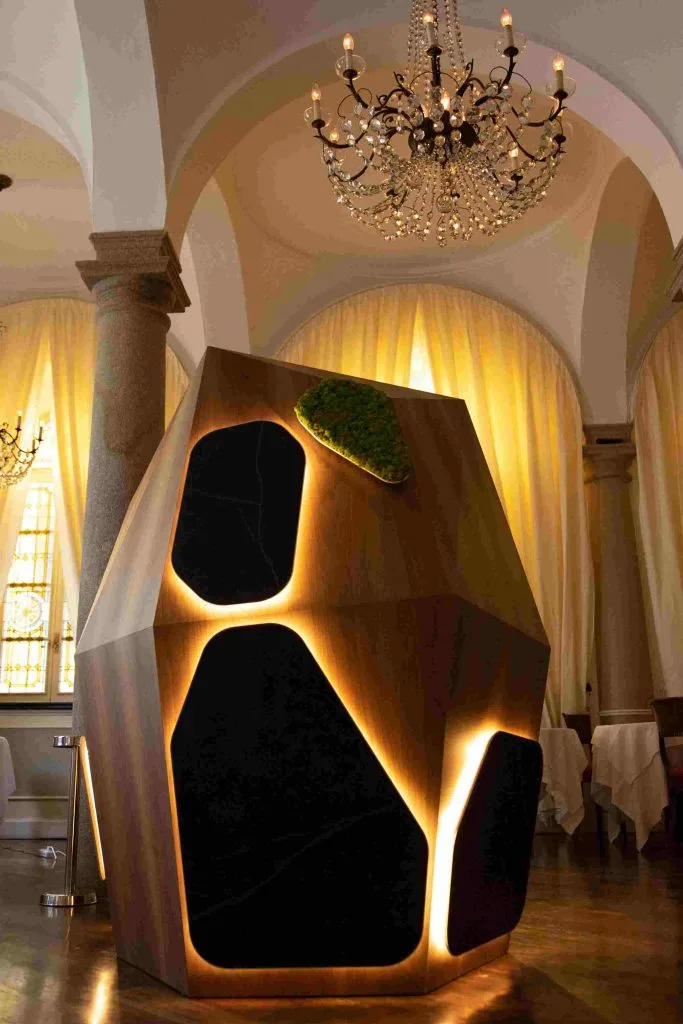
That is why we found so important and inspiring to take part in the “philosophical debate”, today simply called a webinar, hosted by Elli&Rini to celebrate its latest creation, PIANETA, during Milan’s Design Week.

A digital roundtable that was a chance to gather together professionals from different backgrounds and fields, in order to discuss of one of the most pressing matters of our time: technology, and it’s role in relation to mankind, to our future, to our culture, to a city like Milan and to Covid-19.

A matter that has been defined through the title of the event: Milan redesigns a sustainable space&time within a new Digital Humanism“.

Digital Humanism: an idea that resonates with our Vision and Mission

Digital humanism is the result of a hitherto non-experienced convergence between our complex cultural heritage and a technology that has produced a social sphere that has no precedent. This convergence, instead of simply forming a link between antiquity and now, has redistributed concepts, categories, and objects, as well as behaviours and associated practices, all in a new environment. Digital humanism is the affirmation that current technology, in its global dimension, is a culture, in that it creates a new context, on a global scale.

Milad Doueihi, Professor of Digital Humanism at Paris-Sorbonne University

This statement is the basis from which took off our philosophical debate. An event that couldn’t be other than digital, could it?

In front of a screen, we found ourselves talking about the implications of an idea that is very dear to SPII, so dear that is forms part of our VISION: to put the Human Being at the center of a fully automatized and robotized world of the future.

We already live today in an (almost) fully automatized world, where it looks like technology is at the center and mankind is rotating around it: a point of view we would like to invert.

This is why SPII’s MISSION is to provide the best interaction conditions between man and machine, by means of technology, style and ergonomics.

This is why we created a product like Intelliarm: putting a human being at the center of the design.

During the webinar our CTO Silvio Zuffetti brought two more examples of how our Vision and Mission are taking shape, bending design, through technology, to human needs.

Digital Humanism applied to industry

Another example brought us far from our usual field (railway mobility) but closer than ever to our MISSION.

Avanchair is a startup born out of the need to move of the founder Andrea Depalo. Despite (or thanks to) his wheelchair: an idea, then a patent, then a crowdfunding campaign, and the dream is becoming a reality. How? Well, the technology leveraged comes directly from industrial automation and robotics.
This is what Digital Humanism means for us: human needs that leverage machine technology to improve people’s well-being.

Avanchair

The last example echoes 3 words from the webinar’s title: digital, space and time.

V-Desk is a virtual simulator that allows to use VR to immerse people in an experience that is every bit as “real” as the original thing. A breakthrough innovation that can change our industry and beyond.
Typically validating ergonomy and style requires building huge and expensive mockups for people to see and touch things, with long technical times, limitations due to space and distance, etc. Working as we do with the whole world, it becomes almost impossible to proceed that way.

V-Desk allows to overcome this limit – to step “over the edge” thanks to technology, overcoming problems and improving solutions.

V-desk

Designing for sustainability means starting from people and their needs, using technology in the best possible way to draw the square and the circle that enclose a modern Vitruvian man, at the center of innovation, thus obtaining a design that serves mankind, not the contrary.

In our first example – Intelliarm – this means improving working conditions, in the second one – Avanchair – living conditions, and in the third one – V-Desk – we reduce constraints such as space and time.

What does Digital Humanism mean for the rest of us?

It has been interesting to find how our Vision and Mission resonate with so many of us, in so many different fields and situations.

Architecture and its challenges

Such as with Giovanni Antonelli Dudan, architect & interior designer who designed PIANETA with Elli&Rini.

To create it, he asked himself a fundamental question: what are we moving towards to, in the office world?
We spend most of our time in there, but that space is changing quickly and adapting to demands of mobility, fluidity, etc.

Office space and daily living take often place in the same space, now more than ever. We need areas dedicated to concentration, spaces designed for sharing, and others dedicated to relax. Technology allows to combine these spaces, acts as a bridge.

To design this project he started from that: from a human being and his needs.
An office is a closed space, a place to concentrate, to isolate oneself. But it can also be an area of openness, of connection, of sharing. They wanted to go beyond the apparent limit of closed vs. open space. To create something that was both, at the same time.
And PIANETA was born.

The legal perspective

Laura Gobernado Guzman, corporate and real estate lawyer, agrees with us. From her legal perspective, she believes the great challenge of digitalization for humans is its rapidity. The pandemic era proved to be an exponential acceleration of this issue.

How can we handle it?
Firstly, through education: we all need to understand and be prepared to this world, to be in charge of it and not its subjects.
Second, we need regulations: the respect for human rights (which thrives in humanism) in the digital age will depend largely on our ability to give them legal protection.
This means strict rules will be needed to regain democratic control over data, privacy, information, time, etc.

One of the biggest challenges will be to integrate digitalization without losing the value of people’s work (does it sound familiar? The person at the center), and to give it a purpose that benefits human beings and not the opposite.

The spaces we live in

Marco Rossi, Interior designer at Cosentino, has met Digital Humanism in his work often.

A kitchen with “integrated” Digital Humanism

He remembers for example this kitchen’s design, in which a very special monitor was integrated into the wall: its purpose was to show works of art, with a very high level of details and resolution. He reflects that technology serves us today not only to go forward, but also to go back, to rediscover the classics, art, culture in a new way. Even in the home and at the office.

Digital humanism recognizes the importance of technology and the needs that belong to human beings“: he agrees with this, ad materials and technology are collaborating in an increasingly close way, and he sees this everyday.

The luxury of experimentation

Not many industries should understand the most secret and inner human desires and needs, as luxury and fashion. Erica Corbellini, an expert in this field, brought her vision on Digital Humanism to the debate.

“We talk more and more about brands having their own signature, their own humanity somehow, but we need it to be a digital one, which serves for customization, for authenticity, to create a connection with the customer. The pandemic has been a catalyst for transformation, new mediums and habits have emerged”.

In order for a brand to be cool today, it has to be relevant: it has to try new things, new ways of doing old ones. In doing so, a brand communicates a willingness to experiment, but above all to adapt, to put contemporary man and what he lives at the center.

The digital medium allows luxury brands to do all of this, because it allows them to reach everyone directly, in a one-to-one relationship, despite time and space.

A new music

A voice outside the choir (pun intended), the one of Alessandro Solbiati was not coming from any industry โ€“ he is a musician and a composer, and a brought to the table a philosophical discussion about the role of music in relation to the human being.

“The whole history of music would not be what it is if musical instruments had not been invented. And as new ones gradually emerged, so did the possibility to bring music to more and more people: from an exclusive audience at the king’s court to concert halls, theaters, and so on. So music adapts to man, and vice versa”.

The same happened during the pandemic: music, a shared experience by definition, was forced into isolation. But thanks to digitalization, it was possible to create some other forms of shared music such as a a meta-orchestra, made of individual instruments combined and multiplied.
Something that cannot exist in the real world, an example of the possibility of further expressions of mankind thanks to the digital tools.

The answer is “digital living”

Digital Living from Sergio Vaccarini

Finally Sergio Vaccarini, the “Rini” from the Elli&Rini Atelier, took word to talk about the “digital living” that takes more and more place in the “digital places” that we inhabit.

Digital living is a branch of development in search for this new balance: between a man that is is hyper-connected, and environments that are becoming smart, where everything is activated and becomes a source of transmitted or received information.

“Man IS indeed at the center, but also in the middle of a bombing of information, of a storm of calls to action. We no longer go looking for info and experiences in a physical place, they find us”.

The result is “hyper-estrangement“, a feeling of being there with the body but somewhere else with the mind. We need to build places and spaces that recognize this, and adapt to it.

Spaces into spaces“, that serve different purposes – the goal of PIANETA, indeed.

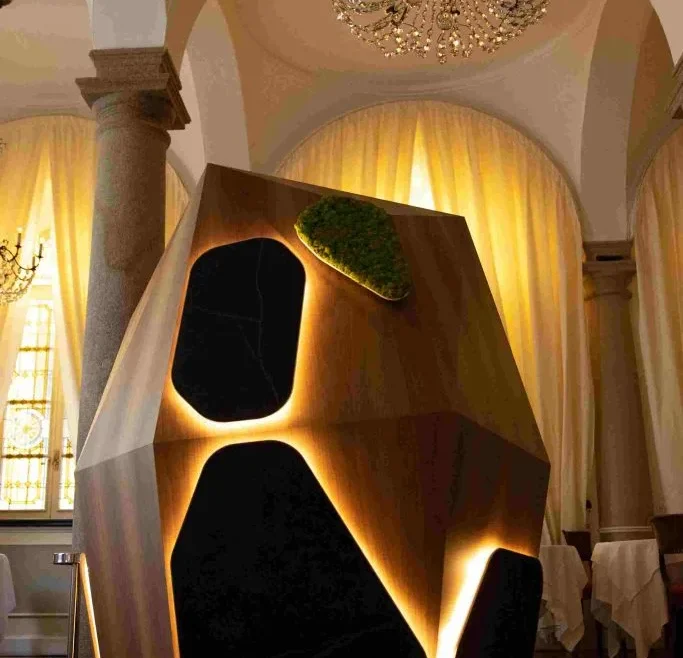
A creation that combines a human centered design from Elli&Rini and Duda design, plus technology and know-how from SPII and Cosentino, in order to provide an answer to all the above.

Pianeta from Elli&Rini

Conclusions

It began as a webinar, a meeting to confront among professionals on the challenges of our time, especially after the pandemic, that saw technology increasingly mediating social interactions.

It ended up into a philosophical quest, looking for answers to difficult questions. Some of them we found, some are yet to be pursued.

The only thing that is sure is this: we are all called to become the heroes of our future, so that we own technology and it doesn’t own us.

If attention to mankind remains at the center, we believe we can only do well.

See you next time,
Ilaria Cazziol

happy women's day

Happy everyone’s day, no one should feel excluded

Happy everyone’s day, no one should feel excluded 1280 856 Spii
happy women's day

Today is a special day. A day to celebrate the force of creation, of change, of resilience.
A great day to remember what we should know everyday.

A day to celebrate the colleagues and team leaders sitting next to us, for the great job they are doing.
To be amazed by the decisions taken by our boss or manager, for the strength and the leadership shown.
To appreciate the relentless work of the assistant, the smile of the caretaker, the attentions of the train crew.

A day to remove the world “female” before any profession, not because it is more or less politically correct, but because it is just superfluous.

Today is the day of Francesca, who smiles at passengers boarding the train she works on because she loves her job. Or Ilaria, who can give for granted the fact that she is driving one.
It is the day of the Russian women, who can start doing this job for the first time in history.
But it is also the day of the countless women who, around the world, still can’t pursue their dreams.

It’s a day to remember that there are no limits, unless we decide so. That WE, humans, can do everything – when we are not told that we can’t.

Choose to challenge

hornet story

In 2021, the International Women’s Day theme is to challenge. Because that’s where change starts.

Do you know the story of the hornet? It’s said that, given the weight of its body and the dimension of its wings, he should not be able to fly. Yet he doesn’t know it, so he flies on and well!

Be it true or not, our challenge for everyone today is to dare being like the hornet.
Ignore what you are told you can not or should not do, just fly.

Just go #WhereverYOUCan.

Choose to include

Our call is for everyone – men, women, and all that falls between.

Because today should be a day of inclusion.
And Inclusion is for everybody, not just for women.
Inclusion means that we understand we can’t do anything alone: we need to join forces to succeed, despite of sex, ideals, roles, etc.

Today is a day when no one should feel excluded, much less so should men. There is no “International men’s day”, and we don’t want them to think we don’t value their role as we do! ๐Ÿ˜‰

Today is a day to celebrate women in all of their forms. But most of all to celebrate friends, colleagues, bosses, train drivers, train managers…without any addition to it.

Happy International Everyone’s Day from SPII!

See you next time,
Ilaria Cazziol

Foto team spii

Resilience: a keyword of SPII’s history

Resilience: a keyword of SPII’s history 972 691 Spii
Foto team spii

As we know very well by now, SPII’s history is tightly connected with the story of the city that hosts the company and of the people who work within.

In the beginning, the business thrived under the leadership of its founder, Angelo Foiadelli, who saw in Saronno the perfect place for his dreams.

In the second phase, the company evolved around the character of Angelo’s successor, Roberto: “L’Ingegnere” (“the engineer”), as the employees respectfully and fondly referred to. He led the company from its past to its future through change and history, and when the time was right he saw the opportunity for growth in the collaboration with a private equity fund, Wise Equity.

It was then that a new chapter began for SPII and its people.

Change is never easy

Its first pages were complicated. When the Fund arrived, the aim was to expand the company beyond its current borders as a “small family business”: to do so it was necessary to change the role of the founding family itself. The Engineer could no longer be a lone leader, a new management team was needed, along with new ways of doing the old business.

Shortly afterwards, something else occurred: SPII merged with another company.
It had a similar size but different culture, so it was one more change in a short time to deal with.

The organization turned from something informal, more similar to a family revolving around the authority of the father (Roberto), to a structured company with different departments, and managers with different backgrounds, coming from small and larger companies. There was even a new CEO.

Meanwhile, the third generation of Foiadelli’s leaders was waiting for its moment to come: Paola, Roberto’s daughter, started making her way within the commercial department.

It was clear she was a born leader, even though a different kind from her father and grandfather.
She was able to surround herself with a crew of like-minded and sharp people, who saw opportunities for improvement and wanted to contribute to the growth.

Talking informally, some ideas emerged about the possibility for positive change and how to make it happen.

Time is never right…until it is!

simon sinek quote

But those projects had to stay on hold for a while, because again time was not right: it was 2012 and the global crisis that had stroke few years before was at its peak.

SPII was not spared: times were difficult even though there actually was an increase in the amount of work.

But this turned out to be the perfect spark for change, as it is often the case when times are tough.
Some people started working closely together and a new team emerged naturally around the leadership of Paola.

There is a famous quote by Simon Sinek that says: “a team is not a group of people who work together. A team is a group of people who trust each other“. This became a kind of mantra, so everything that was to follow started around Paola’s leadership and this belief.

Among other things they did, there was the decision to host informal meetings between different departments that apparently had no common business.
It was a small change, but it started a positive snowball effect of cultural exchange and proactive dialogue within the company.

Paola, with her coordination role, became naturally the leader of this new “movement”, with a leadership style that has been defined a “distributed leadership”: kind, empathic, based on listening to people and empowering them.

In 2015, when Schaltbau joined the company and they started looking for a new CEO, Paola was just perfect for the role.
She knew the market, she knew the company, she was respected and beloved from the employees.

And not because she was the daughter of The Engineer, but because she was something else entirely: just herself.

At that point, the time was finally right.
All the things Paola and her team wanted to do, all the projects, the ideas, the changes…it was finally their time to make them real.

One of the goals during this first part of Paola’s term was to actually turn SPII into a “people-centric” company, making the growth, safety, happiness and evolution of the employees a priority. This led to the establishment of SPII Evolution, among other things…
But this is another story!

Photo team resilience

Leadership is the art of resilience

So this is the end of another chapter of SPII’s history, and the beginning of a new one. Changes are never easy, and there is still much to say to this story, but by now it should be clear: something special runs in the veins of this company.

Yet it is not just blood.

How many great companies pass from one generation to the next without any real evolution?
They remain in some way linked to the fate of the original leadership, like the noble families of the past did: the Medici, Gonzaga, Visconti, exactly like most of the companies based on the founder’s skills, were slowly consumed over time.

Talent is not always passed on from father to son. More importantly, time passes, and what was good during the ‘reign’ of one generation may no longer be useful to the next.

Most companies just keep doing business as usual, with the motto “we have always done this way and it has always worked“. They forget the first rule of success: change is inevitable, resilience is the only possible keyword to get through it.

SPII has always tried to be different: the leadership is at its third generation, but the corporate structure has changed a great deal during time, and the leaders of the family with it.

One generation after another, SPII was able to transition from a small family company to a private equity fund, and eventually to join an international group.

Angelo Foiadelli managed a company with a technical spirit, like all the successful companies of his era did.

Since the 1980s, Roberto Foiadelli has further developed the company with his “commercial” skills: the noble kind of marketing, based on relationships and values, what we may call brand positioning.

Paola is running the company in a different way altogether: a leadership based on people, inspiring them first with the “why” and then with the “what”.

Different people, different talents, different eras.
Ironically, today’s methods would not have led to success in the past, and vice versa.

What was the secret recipe of a story of success, as we discovered before? History, people, change.
And that is exactly the recipe SPII has been following all along.

Is it a coincidence that Paola and her father have been invited to take part in the national “Father to Son Award“?
I don’t think so.
And by now I am pretty sure you don’t either.

See you next time,
Ilaria Cazziol

What’s the secret recipe for a story of success?

What’s the secret recipe for a story of success? 1024 789 Spii

There are not many companies today who can date back their origin to over 70 years ago. Even fewer are the ones who managed to resist through time, history, adversities, change, and still keep their original spirit intact.

Among the few who can, there proudly is SPII. Not because it was a special company, nor thanks to any specific competitive advantage. Probably the reason is that it was founded on people, on their ideas, and still is today.

People are what make history. History is what declares a company successful – or not. And the origin of SPII is a story of history and people, of how successfully interconnected they were.

Let me tell you a tale, then, that dates back to 1947, but is more contemporary than ever.

A product of its time

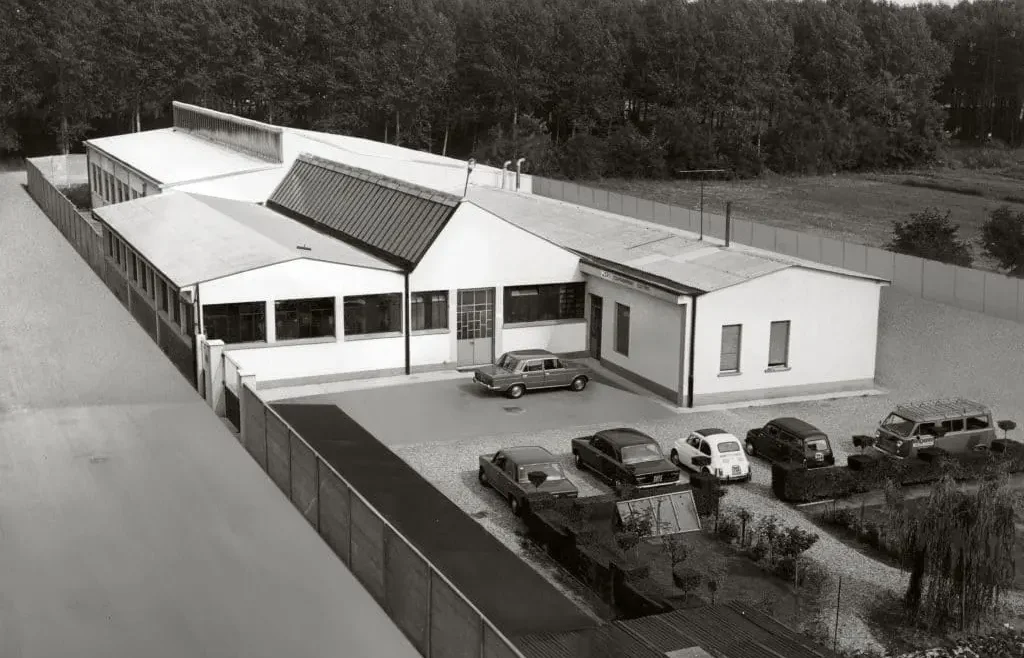
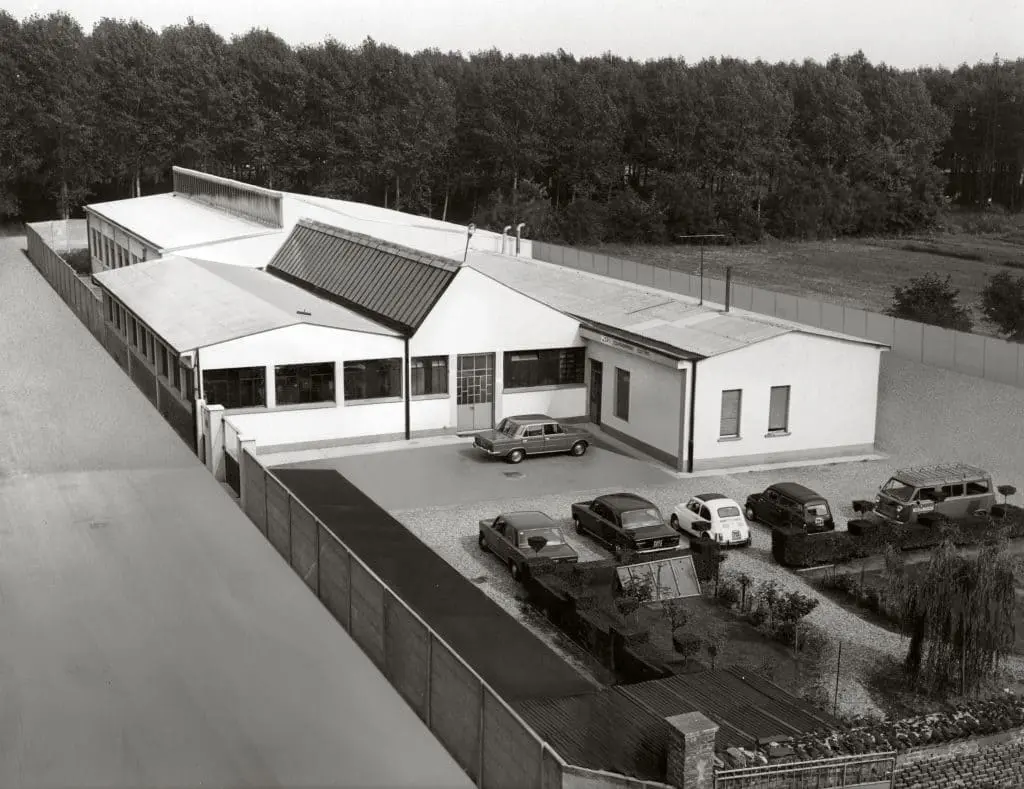
spii's factory in the 1950s
Spii’s factory in the 1950s

SPII was born as a small industrial design studio for electrical appliances. It was a very technical company, a product of its time – the booming fifties.

The industrial history at those times was generally driven by technicians, because there was great request for new inventions to match the ever-growing needs of the population. Selling a product, then, was not hard: money were flowing, people rushed towards the adoption of mass consumption and the economy was booming.

building site in the 50s
Building site in the 50s

But times do fly, and soon enough just inventing the right product wasn’t enough anymore, you had to sell it better than your competitors. Marketing was born in the 70’s, and by the 80’s advertising had become an essential part of the success of any company.

Times were changing also for SPII, and in the late 80’s Roberto Foiadelli, Angelo’s son, best known among the employees as “The Engineer“, succeeded to his father as the leader of the company.
It was him who changed the course of its history and sent it, literally, on a new rail track, becoming a market leader for components and safety devices for railway and industrial applications.

spii factory in the 1950s
Historical photos showing the factory in the 1950s

A new rail track

Roberto was indeed an engineer, but he was also a natural salesman. Most of the management techniques today studied in universities were inborn to him, and that allowed him to create within SPII the authoritativeness that drove the company during the following 30 years. He was the kind of boss who spoke to people one by one: he loved it that way and wanted the company to remain small, only for the Italian market.

But again, time changes. Roberto was smart enough to realize that keeping its “child” from growing was not a successful strategy anymore: the world was moving fast towards innovation, but also towards the difficult times lying ahead in the years 2000s, especially after 2008.

SPII production site 2014
Spii production site 2014

In the early 2000s Roberto Foiadelli began to understand this future world was not the same he used to play in. He decided to open the capital to a private equity fund, in order to gain a a partner with managerial, investment and expansion skills. He understood that overcoming the provincial mentality and expanding into the international arena was the way forward.

That mindful decision and the choiche of Wise Equity as a partner, who proved to be a great one, are what eventually led to the glorious future of the company, despite the crisis that was to come.

A future that would include a partnership with Schaltbau Group, a company with whom Spii worked for the first time in 1965; exactly 50 years later they would close a deal to become a shareholder.

Ultimately, a future that would bring the “professional studio of industrial engineering” to become “strategic partner intelligent interface“.

Spii production site 2018

The future belongs to people who embrace change

This future would see a third generation of the Foiadelli family at the wheel: Paola, a woman leading a company that clearly finds in its history the courage to be innovative, even at uncertain times. A leader that will write another chapter of the story, one that deserves to be told in full.

In the years ahead, difficult for the whole world, those who had bet everything on superficiality, jus on marketing strategies, lost it all. Because they lacked something that SPII has always had: a vision, a mission, strong values.

Today is the era of all these qualities, and this part of history matches perfectly with SPII’s identity: a company that was already like that, even before it became fashionable to be so!

Spii has always talked about agility, flexibility, human capital, and so. And it clearly doesn’t even need to talk about quotas for women in business leadership.
It has always done all of that, looking for new solutions to old needs, with a try&adjust methodology.
Now that these terms are on the first page of newspapers and on television, time has proven Spii to have the right approach.

Probably, that is something that the few companies who can trace their history back to almost a century all have in common. That’s the secret recipe for a story of success: history, people, change.

Albrecht Kohler, CEO at Schaltbau holding AG with Paola Foiadelli CEO at SPII Spa and Roberto Foiadelli chairman of the board at  SPII Spa during the Schaltbau 90th anniversary party in 2019
Albrecht Kohler, CEO at Schaltbau holding AG, with Paola Foiadelli, CEO at SPII Spa, and Roberto Foiadelli, chairman of the board at SPII Spa, taken during the Schaltbau 90th anniversary party in 2019

See you next time!
Ilaria Cazziol

Spii’s Saronno Journey: A Tale of Innovation

Spii’s Saronno Journey: A Tale of Innovation 800 600 Spii

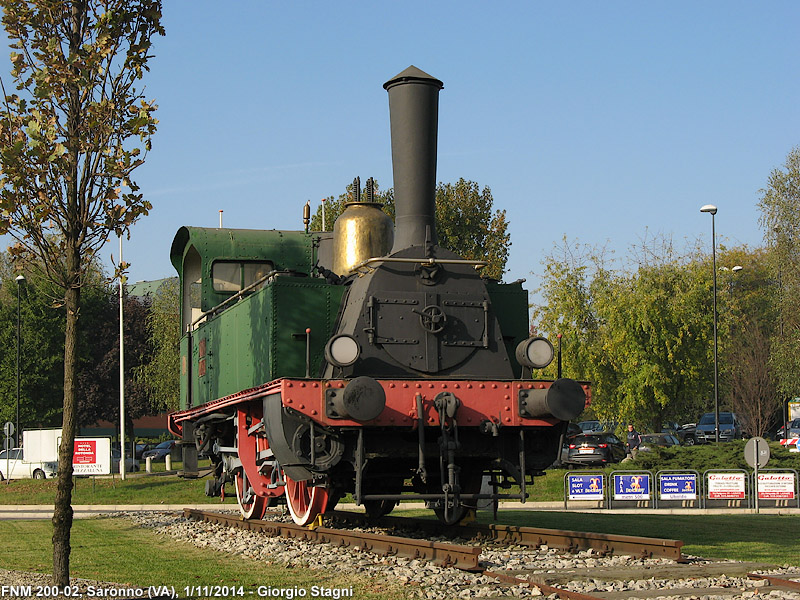
The place where we live has a strong influence over who we are. This is true for people, but it is also true for companies. And it is certainly true for Spii, in its symbiotic relationship with the city that hosts it, Saronno. Which, strangely enough, is not the same where the company was born.

In the last few centuries there has been a clear and evident flow of people, ideas and companies from small towns to cities. An evident and undeniable flood. Still, on the side, less obvious but still clear, another flow has gone in the opposite direction.

A flow that led a Lombard entrepreneur to move his small company from “la Gran Milan” to a town in the province of Varese: Saronno.
It was the 50s, and that entrepreneur who swam against the tide was the engineer Angelo Foiadelli. Spii was “Studio for Professional Industrial Engineering”, a company founded a few years earlier in Milan, and no one could have imagined that we would write about it today.

He made an unusual choice, at least apparently: to move his creature from the big city where it was born, to this small town surrounded by the sharp white teeth of the mountains. It was not so uncommon, though: there is more to Saronno than meets the eye while walking in its picturesque old town centre.

The historical time when the Engineer decided to move his “fabbrichetta“, as it is said in the dialect from Milan, is just one of the many happy ones in the history of Saronno. A town that has carved its way through history, turning its soil into the home of innovation for many, not only for Spii.

Stories of an Italian industrial miracle

Saronno sanctuary

Saronno has been a place of transit all along: situated at the intersection between the provinces of Como, Varese, Monza and Milan, on the way that connected the latter with Lugano, Switzerland, Saronno found itself in an interesting position for all of its history.

But not many had heard of it until the Renaissance, as Leonardo’s favorite pupil, Bernardino Luini, was commissioned to paint a fresco depicting the Madonna and the Adoration of the Magi in the sanctuary of Saronno. A fresco that is still visible today in what is called the Sanctuary of the Blessed Virgin of Miracles – and some true “industrial miracles” indeed she did.

Luini’s Adoration of the Magi in the sanctuary of Saronno

History and legend converge here, as it is told that the painter stayed in Saronno with an innkeeper of particular beauty, with whom he fell in love so much that he used her as a model for his Madonna. As a thank you gift, she presented him with a very sweet liqueur of her invention, an elixir of herbs, toasted sugar, bitter almonds and brandy: the amaretto was born, and it was to become the most famous Italian liqueur in the world.

The “Amaretto di Saronno” first brought this small town at the heart of Lombardy out of the unknown and on the tables of ladies and gentlemen all around the world. And it marks, we could say, the first little “industrial miracle” the sanctuary performed.

Soon to be followed by others. Two hundred years later, on the occasion of an archbishop’s visit to the same sanctuary, two pastry chefs invent another delicacy: the amarettos, unique almond-flavored macarons. During the next century, a company such as Lazzaroni brought these biscuits and their traditional red tin box on a national and international scale (later on, even in fantasy worlds like the one of Harry Potter, as they appear in a scene in the last movie).

Lazzaroni’s amaretti in their traditional red tin box

The town of Saronno where the engineer Foiadelli moved its company was exactly this: a bustling town with a fervent industrial scene. Its location between Milan and Switzerland turned it into an important railway junction between the end of the 19th century and the first half of the 20th century: Milan-Saronno was the first line to be built in the area in 1879.

All of this is why Spii’s founder saw in this town an incredible opportunity for its young business.

He was in good company: Saronno at the time was not only home to famous biscuit and liquor firms, but also to many other industries. The world-famous Isotta Fraschini had a production site here: its cars were driven by the most prominent personalities of the time, from the Savoy family to Rodolfo Valentino, from Al Capone to Mussolini and D’Annunzio.

A history of oximorons

saronno city center

Unfortunately, by the end of the 60s Saronno had already reached its peak and began a slow but firm descent – it was no longer the industrial pole that one hoped for. During the following decades, many of the companies that once thrived on its soil were taken away by time, poor management or inability to stay up to date.

Many did. But it was not the case for Spii.
Our company found the way to keep evolving with the times, changing, adapting, exactly as the city of Saronno did.

Nowadays this may seem like just another town orbiting around Milan, but if you look well enough, you’ll see it is not.
You name it everywhere in the world, and people will know its fame – be it for biscuits, for a liquor, or for reasons they can’t even recall.

It is a town which is far from every border, away from the chaos and the problems of greater cities; but it is also part of the Great Milan, less than an hour away from everything that matters.

If you think about it, the whole story of Saronno is made of oxymorons: small but international, intimate but innovative, close but separated, famous but not too much to lose its own identity.

If you think about it, the whole story of Saronno is exactly the history of Spii.
A story of passion, curiosity and courage.

Are you curious to know more about it? Stay tuned.

See you next time,
Ilaria